A storm leak can mean four calls, and the SES is only one of them
Anyone trapped or injured? Call Triple Zero (000)
- NSW SES 132 500Roof damaged or leaking, or damage you can't fix yourself. Temporary emergency measures only. Attends in priority order. Call back with your reference number to cancel if you no longer need help.
- Licensed electrician or tradespersonBefore gas, electricity or appliances go back on.
- Photograph before you move or clean anything.
- Insurer or private contractorPermanent repairs.
- Renters only: landlord or agentStraight away, in writing if possible, keep copies.
Our count across NSW SES, NSW Government, ABC Emergency and NSW Fair Trading advice.
When rain comes through the ceiling and onto the carpet, most people think of one phone number. By our count across four sources, a renter can need four calls and an owner three, plus Triple Zero if anyone is hurt. At Harbourfresh Carpet Cleaning we'd put the carpet last on that list. Here is the working.
- The NSW SES on 132 500. The SES says to call if the answer to "Is your roof damaged or leaking?" is yes, or if there is damage you can't fix yourself. Call Triple Zero (000) if anyone is trapped or injured.
- A licensed electrician. The ABC says don't turn on gas, electricity or appliances until a professional has checked them. The NSW Government says to use a licensed tradesperson for electrical, plumbing and similar work after water damage.
- Your insurer or a private contractor. SES help is not the full repair: its volunteers carry out temporary emergency measures, and the permanent fix is for your insurer or a private contractor.
- Your landlord or agent, if you rent. Notify them straight away, in writing if possible.
The order matters because the carpet is on a clock. SafeWork NSW's workplace mould guidance says to clean up wet areas and water damage promptly, within 24 to 48 hours. The SES attends in priority order, so while you wait for a crew, the photos and the drying are yours to start. If the leak stops and you no longer need help, the SES asks you to call back with your reference number to cancel.
How storm water gets from the gutter to your carpet
- Blocked gutter and downpipe
- Overflow under the eaves into your roof cavity
- Ceiling
- Carpet and underlay
Check roof tiles, sheets and screws before storm season
Plenty of ceiling leaks start in the gutter. The SES warns that blocked gutters and downpipes can overflow "under the eaves into your roof cavity". From there the water soaks into the ceiling and finds the lowest point it can. In a lounge room, that is usually the carpet and the underlay beneath it.
The SES also advises checking roof tiles, sheets and screws before storm season. One of its media releases warned that storms can "damage roofs and cause flash flooding with little warning", and added: "Storms may arrive in more than one wave." A dry morning after the first storm is not the all-clear. Leave the bucket under the drip and keep an eye on the ceiling.
As for the season ahead, the Bureau of Meteorology's update issued 27 October 2026 says warmer waters can fuel storms and rain systems, increasing potential for high-intensity rainfall. The same update says a strong El Niño does not necessarily mean strong impacts on Australian rainfall. That is a reason to have a plan ready, not a forecast for the Hunter.
Was it rain through the roof, or floodwater?
Did floodwater, mud or sewage reach the carpet?
Yes
- Treat it as probably contaminated (ABC Emergency).
- Floodwater and mud can contain sewage and germs (NSW Government).
- Carpet may need professional cleaning or replacement (NSW Government).
NoRain through a roof or ceiling
Dry it fast, then use the keep-or-throw-out checklist: wet more than 48 hours, visible mould, can't be readily cleaned (SafeWork NSW workplace guidance).
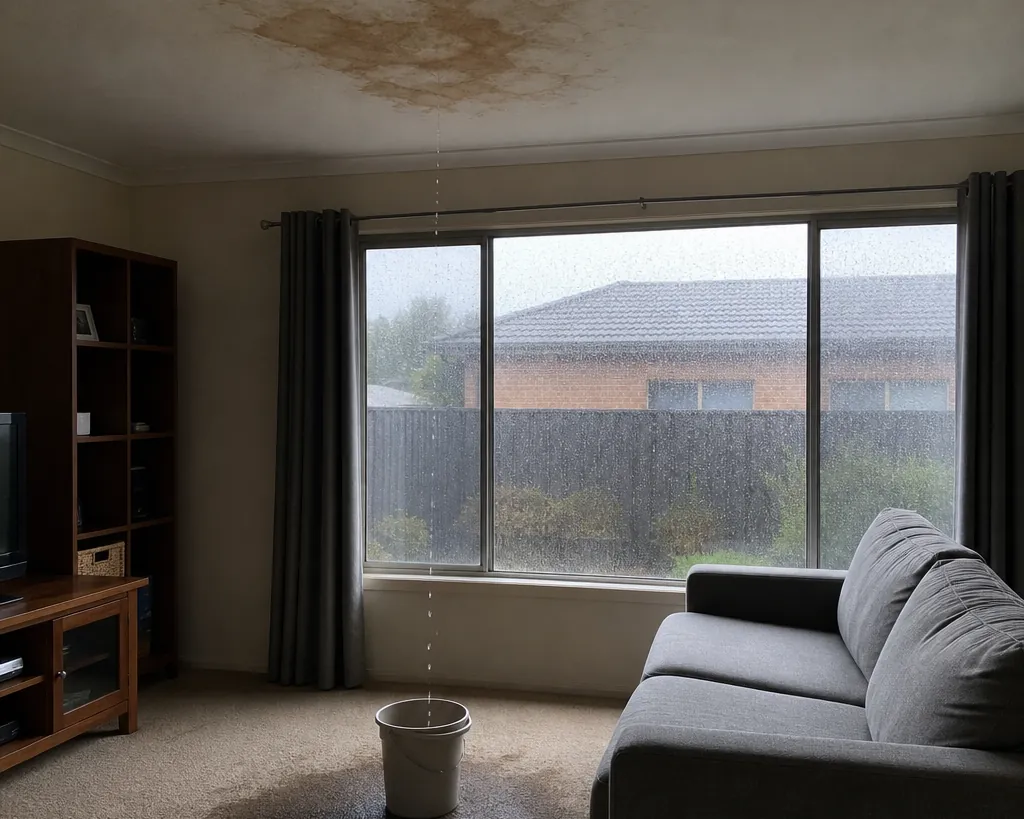
This one question decides most of what follows. Rain dripping through a ceiling and water that has run across the ground into the house are different jobs.
The NSW Government says that after a flood or storm, floodwater and mud can contain sewage and germs such as bacteria, fungi and viruses. The ABC is blunter: anything exposed to floodwater is "probably contaminated". For absorbent materials such as carpet, the NSW Government says they may need to be professionally cleaned or replaced if contaminated.
Rain from a roof leak hasn't crossed a yard or a street. In our view that makes it more often a drying problem than a contamination one, as long as it gets dry fast. If it sat for days, or came through a dusty ceiling cavity in a flood of brown water, treat it with more caution.
What to photograph before you move anything
Document everything, before you move or clean anything.
The ABC's advice is "Document everything": take lots of photos for insurance claims before you move or clean anything. The NSW Government tells property owners to take photos and document any damage.
So before the carpet is lifted or the couch is dragged out of the wet patch, walk the room with your phone. Get wide shots first, then close-ups. Note the time the leak started, because it matters later when you decide whether the carpet stays.
Then contact your insurer. The ABC's photo advice is written for insurance claims, and the NSW SES says permanent repairs are for your insurance company or a private contractor. Cover differs from policy to policy, so read your own product disclosure statement (PDS) rather than relying on what a neighbour's insurer did.
Owner, strata or renter: who sorts out the repair?
| Your situation | What the NSW source says | Your first move |
|---|---|---|
| Owner | More likely to be responsible for clean-up and repairs | Photograph, document, contact your insurer. |
| Strata | Strata may be responsible for some repairs | Tell the strata manager or committee and your insurer. |
| Renter | Serious roof leak, serious storm damage, flooding or serious flood damage are urgent repairs | Notify the landlord or agent straight away, in writing if possible. |
If you own the home, the NSW Government says you are more likely to be responsible for clean-up and repairs. In a strata building, strata may be responsible for some repairs, so tell the strata manager or committee as well as your insurer.
If you rent, NSW rules list "a serious roof leak", along with "serious storm or fire damage" and "flooding or serious flood damage", as urgent repairs. That puts the repair in your landlord's court, and it changes what you are allowed to do while you wait.
Renting: the urgent repair steps, and the rent mistake to avoid
- Notify landlord or agent straight away, in writing if possible, keep copies.
- Can't reach them? Use a licensed tradesperson (check the lease for preferred ones).
- Reimbursed up to $1,000 (checked October 2026), within 14 days of your notice. May not apply if you caused the damage or the repairer wasn't licensed.
Tell your landlord or agent straight away, in writing if possible, and keep copies. If you can't reach them, you can use a licensed tradesperson. Check your lease first for preferred ones.
The cost is reimbursed up to $1,000, within 14 days of your notice (checked October 2026). That reimbursement may not apply if you caused the damage or the repairer wasn't licensed.
Don't stop paying rent while you wait for an urgent repair, because you would breach the lease.
If the marks are still there when you move out, our guide to carpet wear and tear, damage and the pet clause covers that side.
How to dry wet carpet after a roof leak
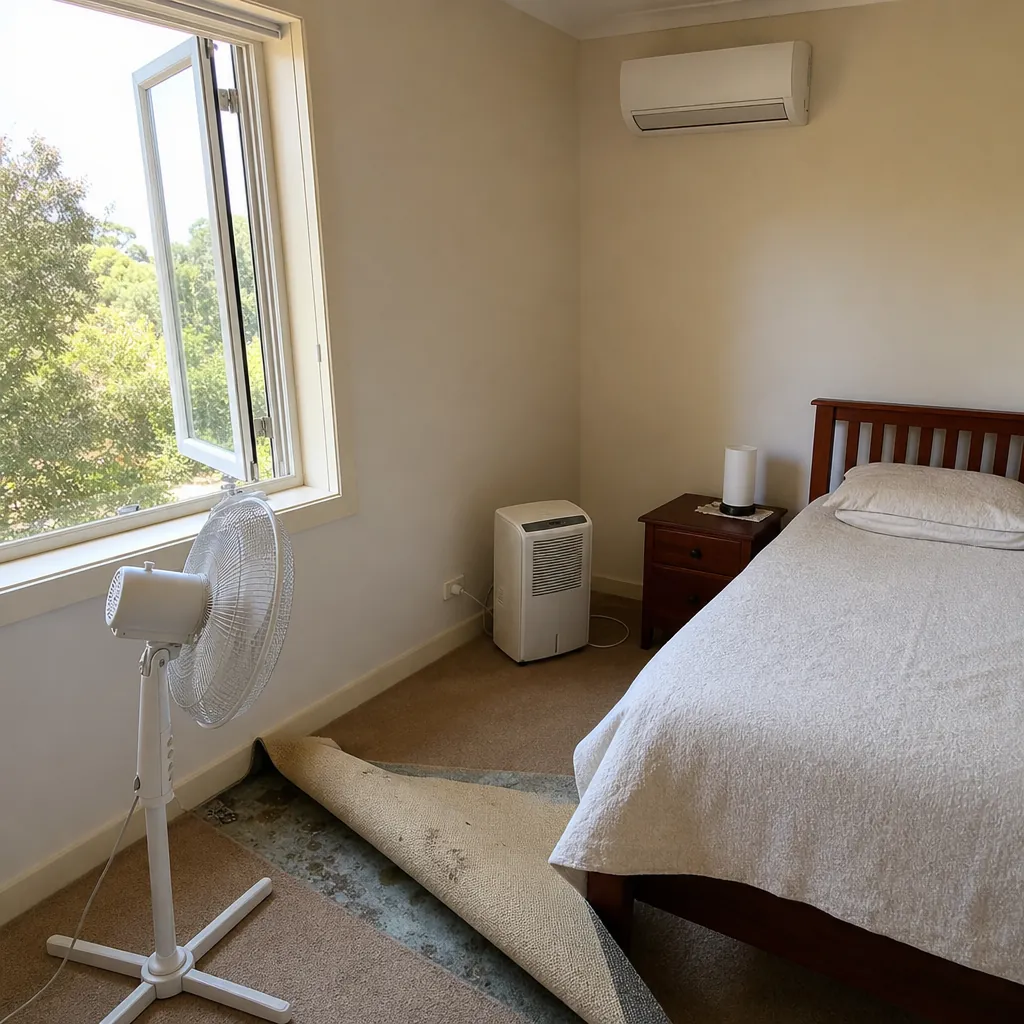
Our first 48 hours guide walks through drying step by step, so here is the storm-leak version in short.
Speed is the point. The NSW Government warns that if items are not completely dry, mould or mildew may develop, and it says to open doors and windows to let in sunlight and fresh air. Between storm bursts, that means opening up. When the next wave arrives, it means closing up again.
SafeWork NSW's workplace guidance lists fans, wet vacuums, dehumidifiers, or air conditioners on dry mode to speed drying. Plug nothing into a wet room until the power has been checked. The underlay holds water the carpet surface hides, so lift a corner and look.
Keep or throw out: a checklist for storm-wet carpet
Points to throw out
Worth a professional look first
Carpet that goes: separate it as hard bulk waste; your council directs where it goes.
SafeWork NSW's workplace mould guidance says to discard porous materials, including carpets, that can't be readily cleaned, have been wet for more than 48 hours or have visible mould. It is written for workplaces, but it gives a home a clear yardstick too.
For flash flooding, the ABC says to dry absorbent items in the sun and clean off mould. If the mould won't come off, they go: "If in doubt, throw it out".
A strong mouldy smell is a warning in itself. SafeWork says a P2 respirator should be considered, and that dry sweeping and household vacuums generate large amounts of dust and should be avoided, so keep them off mould. Our mould on carpet guide covers when to stop cleaning.
Couches and rugs get a second look. The ABC says wet upholstered furniture may have to go unless a professional can clean and restore them, and that sentimental items are worth checking for restoration. Professional extraction helps, but nobody can honestly promise a soaked carpet or couch will come back. Harbourfresh Carpet Cleaning's carpet, rug and upholstery services are there for the pieces worth asking about.
Carpet that does go is hard bulk waste: the NSW Government says to separate it from other rubbish, and your council can tell you where it goes. Photograph it before it reaches the kerb.
Carpet wet for over 48 hours, or with visible mould, should be thrown out
-
132 500
NSW SES storm and flood assistance line (roof damaged or leaking, or damage you can't fix yourself; temporary measures only)
-
Within 24 to 48 hours
prompt clean-up window for wet areas (SafeWork NSW workplace guidance)
-
More than 48 hours wet, or visible mould
discard threshold for wet porous materials, including carpet (SafeWork NSW workplace guidance)
-
Up to $1,000 (checked October 2026), repaid within 14 days of notice
urgent-repair tenant reimbursement cap (may not apply if you caused the damage or the repairer wasn't licensed)
Four figures carry most of the decisions above. Here they are together, each with where it comes from and the conditions attached.
Your next step
Patch the roof, get the power checked, take the photos and make your calls. Then, if the carpet, a rug or the couch got wet from a roof or ceiling leak, tell us what happened: what kind of water it was, how long it stayed wet, and whether you can see or smell mould.
Harbourfresh Carpet Cleaning cleans carpets, rugs and upholstery across Newcastle, Lake Macquarie and the Hunter. Use the free quote form to send us the details.
Sources
- https://www.ses.nsw.gov.au/contact-nsw-ses
- https://www.ses.nsw.gov.au/plan-and-prepare/prepare-your-home
- https://newshub.medianet.com.au/2026/10/media-release-nsw-ses-urges-communities-to-stay-ahead-of-forecast-storms/178212/
- https://www.bom.gov.au/climate/enso/index.shtml
- https://www.nsw.gov.au/emergency/floods/recover/clean-up-advice
- https://www.abc.net.au/emergency/what-to-do-after-a-flood/102502894
- https://www.safework.nsw.gov.au/hazards-a-z/mould
- https://www.nsw.gov.au/housing-and-construction/rules/urgent-repairs-residential-rental-properties
- https://www.nsw.gov.au/housing-and-construction/renting-a-place-to-live/getting-repairs-done